01
Regulation & trust
Patents, GxP, and patient safety make every platform decision feel existential, not merely technical.

Pharma and biotech IT strategy
Strategic innovation, impact, and trends in regulated life sciences
Research on cloud, mobility, and data in the pharmaceutical industry (2015), still useful as a baseline for leaders navigating AI, hybrid platforms, and operating-model change today.
Executive briefings, operating-model design, and pragmatic adoption of emerging technology in regulated life sciences.
Life-sciences organisations depend on innovation, yet remain cautious when data leaves the building, and that tension has not gone away.
Patents, GxP, and patient safety make every platform decision feel existential, not merely technical.
Research, clinical, and commercial data carry different risk profiles. One-size-fits-all cloud strategies rarely land.
Shared services and centres of excellence helped, but AI-ready analytics still outpaces the people who can shape it.
Teams expect modern tools at work. Mobility and shadow IT pressure standards that took years to establish.
My research captured the industry around 2015; compare what we anticipated with what leaders face today.
Cloud was framed as opportunity and threat: cost pressure drove interest, while security and unclear standards held enterprises back. Sales & marketing workloads were more acceptable in the cloud than R&D or manufacturing data.
Hybrid and sovereign cloud are the norm in pharma. The conversation has shifted to validated workloads, vendor lock-in, and AI factories in controlled environments, not whether to use cloud at all.
Mobility meant managed devices and selective mobile access to approved data. IT consumerisation was emerging; standardisation was still the default response.
Field teams, labs, and executives work across devices and apps daily. Zero-trust, MDM, and identity-first access matter more than device homogeneity, especially for cross-border teams.
“Big data” and analytics were strategic but immature. Respondents already used data for decisions, yet few saw IT as data owner, and specialist talent was scarce.
GenAI, lakehouses, and real-world evidence dominate the agenda. The bottleneck is governance, quality, and operating-model fit, not dashboards. Responsible AI is the new compliance frontier.
Tap a card to see what the study explored, in plain language.
Agility vs. control in a regulated enterprise
Click to read more Tap to flipThe book examined whether pharma could run as-a-service models without compromising IP, validation, or operating-model coherence, and what “good” looked like for CIOs choosing platforms.
Access anywhere, governance everywhere
Click to read more Tap to flipIt assessed how mobile access to commercial data differed from sensitive R&D or manufacturing information, and why technology management became a hidden cost driver.
From reporting to strategic advantage
Click to read more Tap to flipBD&A was already influencing decisions, but ownership, skills, and trust lagged. The study mapped barriers that sound familiar today: privacy, regulation, and fragmented accountability.
Drawn from the survey, literature review, and transformation experience captured in the eBook.
IT trends were often seen as risk as much as opportunity. None of the respondents felt ahead of peers on cloud; most felt at par across cloud, mobility, and analytics.
Sales and marketing data in the cloud was acceptable; sensitive R&D or manufacturing data was not. Mobility and analytics faced similar boundaries.
Security, privacy, and regulation topped the list. Technology management and scarce specialist talent slowed mobility and BD&A adoption.
Centres of excellence and shared services aligned with a unified, standardised model. IT trends were judged by how well they supported that choice.
Strategic choices used analytics plus experience, yet IT was rarely seen as data owner. Accountability sat with the wider organisation.
ROI narratives mattered for large programmes. Industry-specific IT standards were weak, leaving fewer reference points for fast adoption.
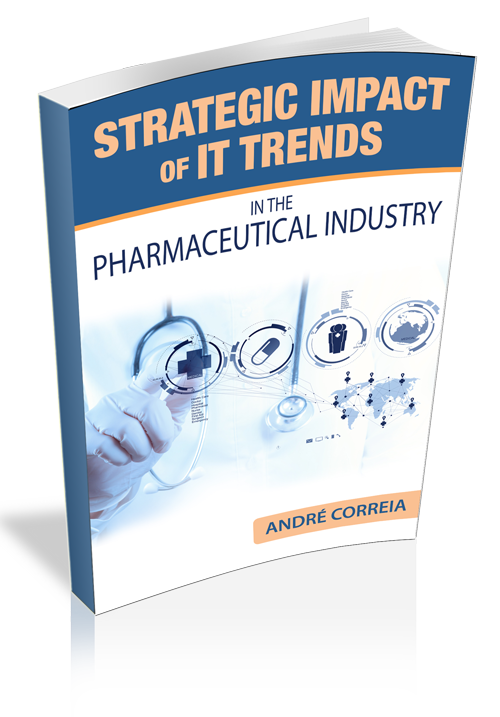
A grounded study by me, based on industry literature, a bespoke survey, and lived experience inside pharma transformation, developed through my Executive MBA at Bayes Business School (formerly Cass). Still useful as a baseline. Best read alongside today’s AI and platform realities on the Insights page.
Download with email access
IT Strategy & Digital Transformation leader
I am a senior IT leader with 25+ years delivering business and digital transformation, often in multinational settings across the UK, Switzerland, Portugal, Angola, Singapore, and beyond.
I spent years inside a major pharmaceutical transformation programme: long enough to understand the culture, the operating model, and why adoption of new technology is never only a technical decision. That work became my Executive MBA dissertation at Bayes Business School (formerly Cass) in London, and later this eBook.
Today, I lead international, large-scale digital transformation programmes, increasingly shaped by AI, data platforms, and clearer operating-model choices between global standards and local need. That work is informed by executive education at INSEAD, including Transforming your Business with AI. Beyond corporate IT, I advocate for patients and families affected by Rare Diseases. Learn more at The Rare Mind.
Executive briefings, workshop facilitation, and advisory for leadership teams in regulated life sciences, including AI and data strategy, IT operating models, digital transformation leadership, and cloud, mobility, and platform governance. Practical, evidence-informed, and tailored to your context.